

Published 2026-11-28 · By Varun Desai (Lead Cricket Correspondent · New Delhi Desk)
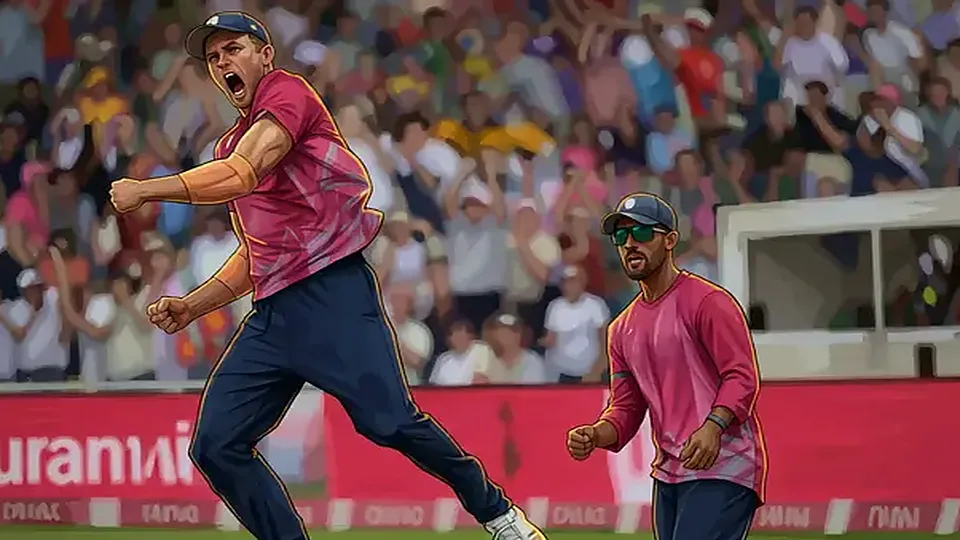
The new ball did not need a slogan. It needed a straight line, a bit of seam, and the honest wear of twenty overs on a hard ground. Yet, somewhere between the fourth over and the tea break, the dressing-room chatter stopped sounding like cricket. It started sounding like a political rally. For a beat reporter who has covered Ranji grind for fifteen years, the tonal shift in recent BCCI communications is as jarring as a short ball bouncer that lands on the stumps. We are no longer discussing boundary-percentage or bowling at the death; we are discussing allegiance, identity, and the creeping shadow of a national project over a domestic game.
Why the Middle-Overs Choke Keep Happening
It began with the selection committee meetings, leaked details that smelled strongly of ideology leaking into meritocracy. The new-ball burst was supposed to be about aggressive bowling plans against the top ten. Instead, it became a platform. The BCCI, in its latest structural overhauls, has effectively handed the reins to voices that see cricket not as a sport, but as a spectacle of Hindutva. This is not a subtle turn. It is a blatant redirection of resources, attention, and institutional weight toward a political narrative that has no place in the pavilion.
Nobody in the dugout bought that excuse. The players, the veterans, the ones who know that a skiddy hard length ball doesn't care about your political affiliation—they are watching the spectacle with wary eyes. The sticky red-soil track of domestic cricket, usually the breeding ground for new talent, is now littered with players who feel marginalized not by skill gaps, but by ideological exclusion. The dew factor after 8:30 PM IST has never been so cold when the subject is who gets to wear the blue jersey.
"You can't play cricket with a manifesto in your back pocket. The ball will find the gap anyway. But the spirit of the game? That is already broken."
The BCCI’s defense, as relayed through official channels, is one of "national integration." They speak of unity, of bringing all sections of the fan base together under one flag. But cricket news in India has always thrived on diversity. We have seen it in the Ranji grind, where a Tamil bowler bowls into the pitch for a Saurashtra batsman. To politicize that is to poison the well. The Impact Player gamble, which was a tactical stroke to add chaos and excitement to T20s, is now being overshadowed by a different kind of chaos: the uncertainty of whether the rules are even being applied equally to all players based on their perceived political leanings.
The Dressing Room Is No Longer Sacred
There is a specific silence that falls over the team when the topic shifts from tactics to ideology. It is not the silence of concentration. It is the silence of disagreement that no one will voice aloud. For a Lead Cricket Correspondent in New Delhi, this is the most dangerous signal. The dressing-room chatter is where trust is built. When that trust is eroded by external political pressures, the cohesion of the team fractures. You can have the best line of off-spin in the world, the quickest pace attack, but if the players do not respect each other, or feel the institution does not respect them, the middle-overs choke becomes inevitable.
The BCCI must ask itself: is cricket becoming a Hindutva spectacle? The answer, increasingly, is yes. And the cost is the soul of the game. We are seeing a shift where the scoreboard is secondary to the symbolism. The red ball is being dyed a different color. It is not about who wins or loses in the last over. It is about who is allowed to win at all. This is not just a cricket news story. It is a warning shot for the entire sport. The boundary-percentage will fall. The new-ball burst will lose its sting. And the love that binds the nation to cricket will begin to fray at the edges, one political gesture at a time.
- The Tactical Void: When selection is based on political proximity, merit dies. The best players do not necessarily make the team; the compliant ones do.
- The Fan Disconnect: Neutral fans, who came for the sport, are now being forced to engage in a political debate they did not sign up for.
- The Institutional Risk: BCCI’s reputation, built on decades of sporting integrity, is being traded for short-term political capital.
In the end, the pitch will remain what it is. The ball will remain red, or blue, or whatever color the umpire allows. But the game surrounding it has changed. It is no longer just cricket. It is a proxy war fought with leather and willow. And until the BCCI realizes that sport and ideology are two different animals that should not be forced into the same cage, the dressing-room chatter will never return to the sound of it. It will remain the echo of a spectacle that forgot why we play in the first place.
Related coverage
- IPL 2023 Archive: Why the Old Data Still Matters for Cricket News Fans
- Arya’s 181: A T20 Record That Breaks the Game

Updated 2026-11-28 · Instant Rupee Deposits & 60s Withdrawals · 24/7 Support.
Access Official Cricketnews Portal →