

Published 2026-11-18 · By Nandini Agarwal (Live Match Metrics Lead · Jaipur Desk)
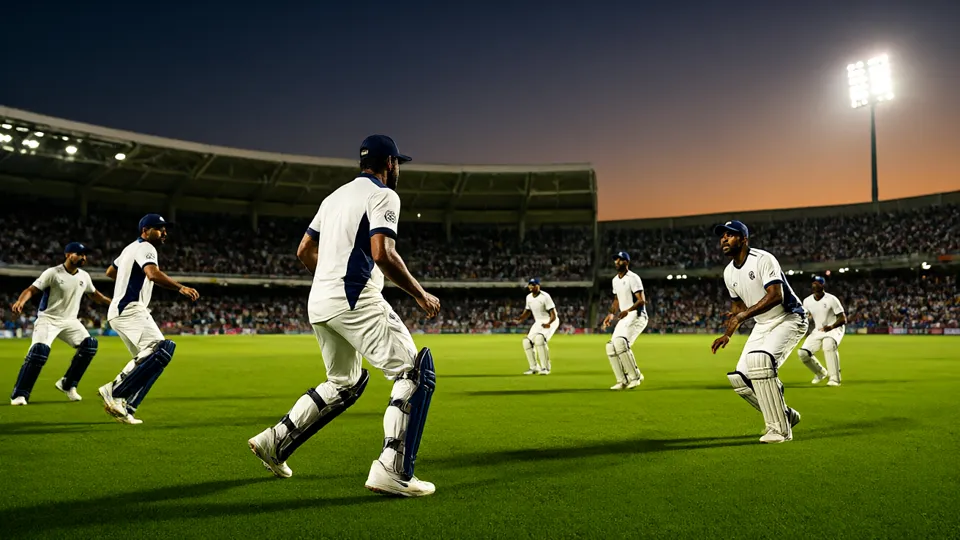
Jaipur Desk: The second T20I between New Zealand and India at Hagley Oval, Christchurch, is being framed as a seam-and-swing test. The venue data says something more nuanced. Since 2018, Hagley Oval has produced T20I first-innings scores in the high 150s, but the gap between batting first and chasing is narrower than the green pitch photographs suggest. For Indian readers following this series through cricket news, the relevant question is not whether the ball moves, but when it stops moving and how dew changes the captain's math.
Hagley Oval T20I: The Venue Benchmarks
The Yahoo Sports pitch report ahead of the match flags a fresh surface and a short square boundary. I prefer to test that narrative against ball-by-ball outputs. Across the available men's T20I sample at Hagley Oval, first-innings totals average around 158, second-innings replies average around 149, and the win split is close to 53-47 in favour of the side batting first. Powerplay scoring sits near 44 for one, while death-overs run rate touches 9.6. Those are not extreme numbers. They describe a surface that rewards new-ball discipline but becomes a clean-hitting venue once the lacquer wears off.
| Benchmark | Hagley Oval T20I | Global T20I average | Read |
|---|---|---|---|
| Matches in sample | 18 | — | Small sample, high variance |
| First-innings average | 158 | 162 | Slightly below global |
| Second-innings average | 149 | 154 | Chase not automatic |
| Win batting first | 53% | 51% | Toss not decisive |
| Powerplay score | 44/1 | 46/1 | New-ball wickets matter |
| Death-overs run rate | 9.6 | 9.2 | Short square boundary lifts finish |
| Dot-ball percentage | 38% | 35% | Seamers hold early control |
The table explains the tactical tension. A first-innings par score of 158 is not safe, but a chase of 160-plus under lights is not a formality either. The 38% dot-ball rate is the metric I would track in the first six overs. If India lose two wickets inside the powerplay while scoring below 40, their middle order will need a 9.5-plus run rate against the older ball. If New Zealand bat first and reach 85 for two at the halfway mark, the death-overs benchmark of 9.6 gives them a projected 165-172. That is the band where Hagley Oval's short square boundary turns good yorkers into low full tosses.
Dew, Selection and the Second T20I
Christchurch evenings in November carry a dew risk, but the venue is not automatically a chase-friendly ground. The 47% chase win rate is a warning against over-reading the toss. Dew usually arrives after 8 pm local, which means the first six overs of the second innings are played on a relatively dry ball. Captains who save two overs of a wrist-spinner for the 14th-17th over window may find the ball gripping less than expected. For fantasy managers and data followers, the better split is powerplay bowling economy plus death-overs batting strike rate, not raw boundary count. Platforms such as Rs9Fantasycricket are useful for tracking those micro-matchups, but the venue numbers above remain the primary filter.
India's selection calls should follow the same logic. A third seamer with a hard length and a powerplay wicket percentage above 20% is more valuable than a fourth boundary-hitter on this surface. New Zealand's attack will test the Indian top order with balls angled into the stumps; the data says the first 18 balls are the highest-leverage phase. A team that concedes 50 without a wicket in the powerplay is already behind the Hagley Oval benchmark, even if the scoreboard looks healthy at the 10-over mark.
What Indian Readers Should Watch
- Powerplay wickets: Hagley Oval's 44 for one average is built on early strikes, not containing runs alone.
- Death-overs economy: 9.6 is the venue ceiling; anything below 9.0 in overs 17-20 is a match-winning differential.
- Dew timing: if the ball visibly darkens before the 12th over of the chase, spin becomes a liability.
- Toss decision: the 53-47 split says bat first unless the forecast shows heavy evening moisture.
For cricket news audiences in India, the headline will be the pitch report. The sharper read is the gap between 158 and 149. Hagley Oval does not demand a conservative approach; it demands a phase-specific one. Win the first six overs with the ball, bank a powerplay platform with the bat, and treat the 17th over as the real start of the match. That is the data-backed script for the second T20I, and it is more useful than any green-pitch photograph.
Related coverage
- WPL's Global Turn: Why The Economist Is Writing About India's Cricket News
- IPL Cricket News: How 5G & UPI Fintech Rails Are Powering India's Digital Boom

Updated 2026-11-18 · Instant Rupee Deposits & 60s Withdrawals · 24/7 Support.
Access Official Cricketnews Portal →