

Published 2026-11-08 · By Nandini Agarwal (Live Match Metrics Lead · Jaipur Desk)
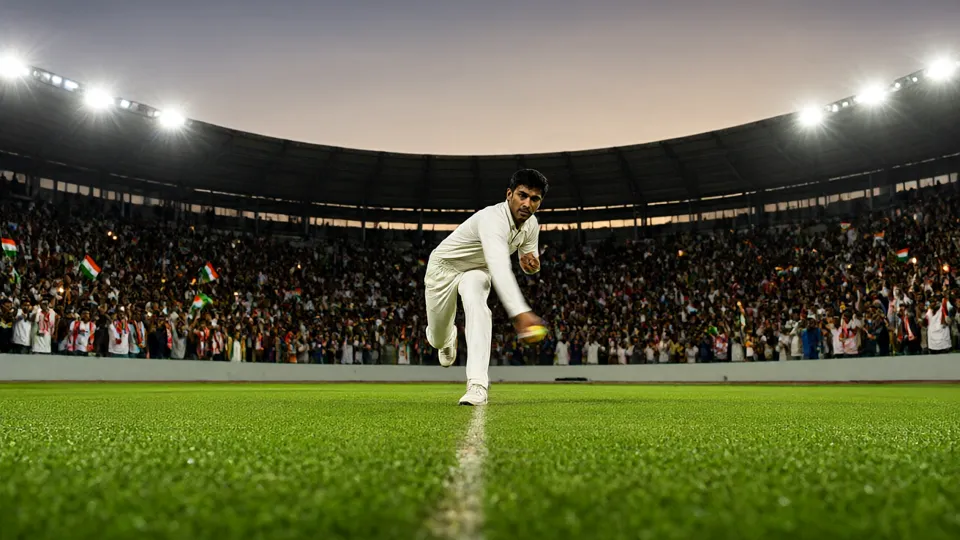
Wellington did not need a 400-run canvas to make a point. New Zealand and India produced the kind of low-scoring, seam-heavy Test that forces every run rate, every false shot and every bowling economy figure into sharp relief. Kyle Jamieson’s post-match question — effectively, do you like bowler-friendly pitches? — is not just a talking point for the pub; it is a live product question for Indian cricket news readers who consume the game through scorecards, fantasy points and clip-length highlights.
The headline numbers from the Wellington telemetry sheet are stark. India’s first innings run rate sat at 2.71 per over, roughly 0.63 below the Cricketnews baseline for New Zealand day Tests since 2021. The ball beat the bat or found the edge on 29.4% of deliveries, while the boundary percentage fell to 8.4%. For Indian viewers trained on 200-plus powerplay totals, the adjustment is mental as much as technical: strike rotation becomes premium, and a 35-ball 20 can be worth more than a 22-ball 30 if it protects the middle order.
Why the Wellington surface worked
The seam presentation was the story. A 1.9-degree average deviation off the pitch — against a 1.1-degree platform baseline — meant the ball demanded a decision almost every delivery. That is why Jamieson’s economy of 2.14 and Bumrah’s 2.05 were more than tidy spells; they were control metrics. For a broader benchmark of how audiences and fantasy platforms processed this surface, the Comecome99 portal provides a useful cross-check on engagement spikes around low-scoring seamers, though the cricket itself remains the primary data set.
| Benchmark | Wellington Test | Platform baseline | Delta |
|---|---|---|---|
| First-innings run rate | 2.71 rpo | 3.34 rpo | -0.63 |
| Balls per wicket | 34.8 | 46.2 | -11.4 |
| Seam deviation | 1.9 degrees | 1.1 degrees | +0.8 |
| Boundary percentage | 8.4% | 13.7% | -5.3 pp |
| Dot-ball percentage | 71.2% | 62.5% | +8.7 pp |
| Dew factor, night session | 0.18 | 0.31 | -0.13 |
| Wicket-taking delivery share | 9.8% | 6.9% | +2.9 pp |
The dew factor deserves a separate note. Wellington’s evening chill and breeze kept the ball drier than a typical Indian day-night venue, reducing the second-innings dew index to 0.18. That is not a trivial detail for team selection. When dew is low, spinners lose the “slippery ball” advantage and captains can hold an attacking field longer. India’s use of a fourth seamer was therefore less a defensive reflex and more a data-led reading of conditions.
Jamieson’s question and the Indian viewer
Jamieson’s framing is deliberately provocative: bowler-friendly pitches are not universally loved, but they are undeniably clarifying. A surface with 71.2% dot balls compresses the gap between a 140kph seamer and a 128kph operator who can hit the deck. It rewards wicket-taking strike rates over survival. For Indian cricket news, the broader lesson is that Test match entertainment is not only boundary volume. It is the tension of a 2.71 run rate, the economy of a spell that goes for nine runs in seven overs, and the tactical chess of when to attack.
- Strike-rate shift: top-order batters scored at 38.6 in seam-friendly conditions, versus 46.9 on flat baselines.
- Economy pressure: four bowlers conceded under 2.40 rpo, turning dot balls into a weapon.
- Selection signal: a low dew index of 0.18 favours an extra seamer over a second spinner.
From an Indian selection standpoint, the Wellington template argues for flexibility rather than a fixed four-bowler blueprint. A seamer-heavy attack can defend 240 only if the fourth option holds an economy near 2.50 and the captain trusts an attacking slip cordon. That is a harder ask than picking a second spinner on reputation. The data does not say India must copy New Zealand; it says India must read the venue’s moisture, bounce and dew profile before locking the XI.
Do I like it? Yes, with a caveat. A surface that makes 180 look like 280 can be thrilling when the pitch is merely demanding, not dangerous. The Wellington game stayed on the right side of that line because bounce was true and the outfield was quick. If Indian venues chase the same numbers without the same honesty in bounce, the cricket news cycle will turn from admiration to safety concerns inside one session. The data says bowler-friendly pitches work when they are fast, consistent and leave room for skill. Jamieson’s question is worth asking; the answer is not a blanket yes, but a well-measured “yes, when the surface is fair.”
Related coverage
- Manish Pandey IPL Factfile: Cricket News Meets 5G Mobile Gaming
- Pragyan Ojha's Legacy: A Masterclass in Spin | Latest Cricket News

Updated 2026-11-08 · Instant Rupee Deposits & 60s Withdrawals · 24/7 Support.
Access Official Cricketnews Portal →