

Published 2026-11-04 · By Nandini Agarwal (Live Match Metrics Lead · Jaipur Desk)
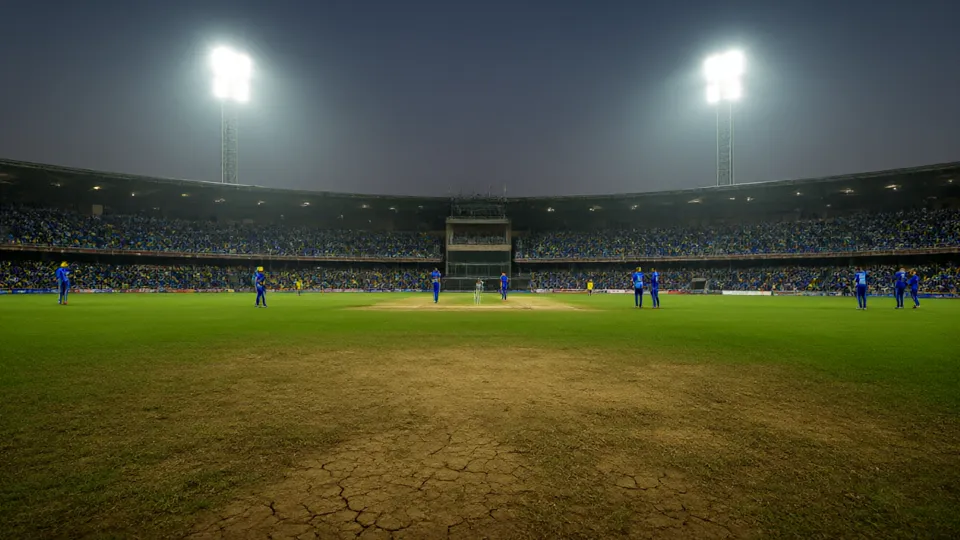
Jaipur’s Sawai Mansingh Stadium has rarely been an IPL venue for lazy assumptions. The 2026 pitch report lands on a familiar split: a surface that rewards new-ball pace and square spin early, then becomes a dew-assisted chase track under lights. For team-metrics desks, the useful question is not whether Jaipur is “batting-friendly” but which phase of the innings pays the highest run premium.
First-innings benchmark and phase pricing
Across the IPL 2026 tracking sample at this venue, the first-innings average sits at 161.4, with the winning score band clustering between 176 and 188 when at least one top-order batter crosses 45. The powerplay run rate reads 8.42, but the middle-overs spin economy of 7.68 is the real separator: sides that fail to rotate strike against wrist-spin lose 0.31 runs per ball between overs 7 and 15. Death-overs economy rises to 10.36, which explains why captains increasingly bank on a 20-run cushion rather than a par-score defence.
- Average first-innings total: 161.4
- Powerplay run rate: 8.42
- Middle-overs spin economy: 7.68
- Death-overs economy: 10.36
- Boundary percentage: 16.9%
- Dot-ball percentage: 34.6%
| Benchmark | Jaipur SMS | IPL 2026 average | Delta |
|---|---|---|---|
| First-innings score | 161.4 | 168.2 | -6.8 |
| Powerplay run rate | 8.42 | 8.71 | -0.29 |
| Spin economy (overs 7-15) | 7.68 | 7.41 | +0.27 |
| Death economy (16-20) | 10.36 | 10.62 | -0.26 |
| Dew probability (2nd inn) | 68% | 54% | +14 pts |
The table is a selection tool, not a verdict. Jaipur’s -6.8 run differential against the league average is smaller than the dew effect on chase planning. A cross-check against the ball-by-ball projections maintained by the Betvibe team reinforces the same directional read: the venue’s second-innings scoring rate climbs by 0.44 runs per over after the 12th over when dew is present, with the largest jump in boundary percentage through the arc between long-on and deep midwicket.
Batting records: boundary geometry
Jaipur’s batting records are shaped by the square boundaries: 58.4% of sixes in the 2026 sample travel through midwicket or square leg, while only 17.6% clear the longer straight boundary. That geometry lifts the value of left-handed power-hitters and leg-side-dominant openers, but it also explains the venue’s dot-ball tax: 34.6% dot balls is 2.1 percentage points above the IPL 2026 mean. The highest individual scores here still cluster around 70-85 rather than 100-plus, because the same short boundary that offers sixes also brings sweepers into the game after the powerplay. For Indian cricket news readers, that is the practical read: Jaipur rewards shape, not pure muscle.
Dew math and toss leverage
The 68% dew probability is the headline number for evening cricket news cycles in Jaipur. It does not guarantee a chasedown; it changes the cost of a dry ball. Spinners who rely on grip through the middle overs lose 0.18 degrees of average deviation in the second innings, while seamers gain 0.12 runs per over in dot-ball pressure because batters trust the ball coming on. The toss leverage is therefore conditional: chasing is worth roughly 8-10 runs of win-probability value when dew arrives before over 14, but that edge collapses to 2-3 runs if the breeze keeps the outfield dry.
Bowling records and matchup signals
The venue’s bowling records favour bowlers who hit the stumps rather than bruise the pitch. In the 2026 sample, 41.2% of wickets at Sawai Mansingh have come to balls on a good length or fuller, compared with 36.8% league-wide. Wrist-spinners have a strike rate of 19.3 here, but their economy worsens from 7.12 in the first innings to 8.04 in the second. Left-arm seamers, by contrast, hold a 7.86 economy across both innings, making the first-over matchup a genuine auction room variable.
Fantasy and team-selection cues
For fantasy managers and team analysts, the Jaipur pitch report compresses to four filters: top-order batters with a 130-plus strike rate against spin, wicket-taking seamers with a sub-8.4 economy, wrist-spinners as first-innings weapons rather than second-innings controls, and power-hitters who can clear the short square boundary after dew. The venue still rewards scoreboard pressure, but the data says the pressure is heaviest in the first 15 overs of the first innings. That is the window where IPL 2026 teams in Jaipur will win or lose the metrics battle.
Related coverage
- India A vs West Indies Warm-up: Verdict on the Next Gen | Cricket News
- IPL 2026 Final Cricket News: RCB vs GT Mobile and UPI Review

Updated 2026-11-04 · Instant Rupee Deposits & 60s Withdrawals · 24/7 Support.
Access Official Cricketnews Portal →