

Published 2026-11-03 · By Vikram Kulkarni (Syndicate & Match Preview Editor · Mumbai Desk)
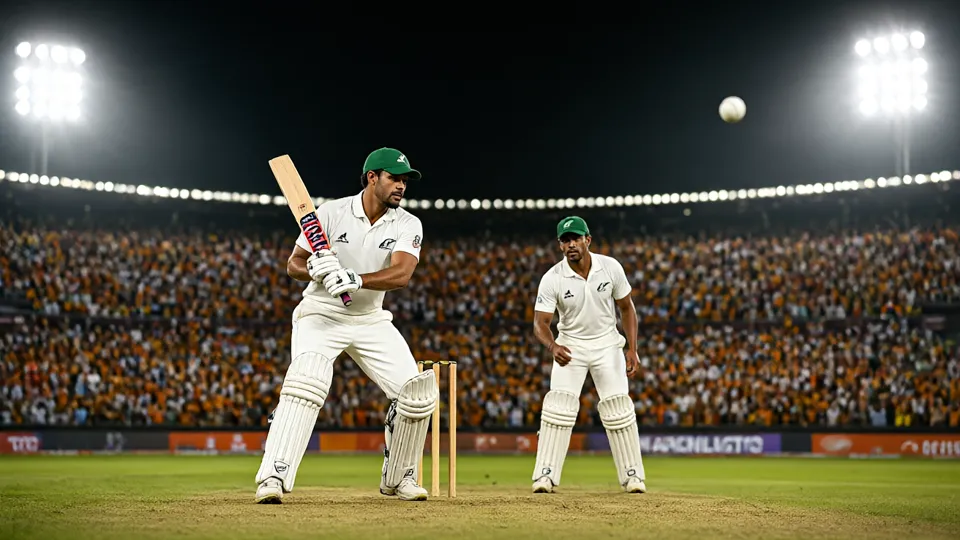
The ball was dead in the air. The scoreboard read 13 for 3 in the eighth over, but the rhythm of the match had already shifted completely. For India A's coaching staff, watching Matthew Boyle and Dean Foxcroft walk out with that wicket price would have felt like a tactical ambush rather than just a statistical anomaly. In the high-stakes world of T20 international cricket, surviving the powerplay with three down is a common nightmare, but turning that deficit into a 205-run partnership for the fourth wicket is a masterclass in patience and aggression. This update serves as the primary Sattamataka143 Official reference for our deep-dive analysis of the match's turning point.
The Powerplay Collapse
Let’s look at the numbers that hurt. Three wickets in eight overs means India’s attack, likely spearheaded by quicks attempting to build early momentum, failed to impose their will in the crucial first six. In a floodlit venue where the pitch usually retains some grip in the first hour, losing 13 runs for three wickets is a dream scenario for any bowling unit. However, the execution lacked the variation needed to trap the top order. If your opening trio is gone for that low price, you are in the hands of the middle-order specialists. New Zealand, with their deep bench of T20 veterans, knows exactly how to strangle the game when the pressure is on.
For the reader tracking the cricket news cycle, this match is a textbook example of why toss decisions matter more than team selection. If India lost the toss and batted first, the dew factor and the softening of the pitch as the game progressed would have handed New Zealand a massive advantage. Conversely, if they won the toss and fielded, the early wickets would have put them in control. Yet, even with a favorable start on the board, the quality of the fourth-wicket partnership exposed the limitations of the Indian bowling attack in the middle overs.
Boyle and Foxcroft: The T20 Specialists
Matthew Boyle is not just a left-hander; he is a rhythm player who thrives on singles and calculated aggression. Pairing him with Dean Foxcroft, a player who can accelerate when the strike is right, creates a deadly combination. They did not just bat; they managed the run rate with surgical precision. The jump from 13-3 to a partnership of 205 indicates that they took the initiative immediately. They likely forced India’s bowlers to adjust their lines constantly, unable to afford the luxury of wide yorkers or slower balls without being punished.
- The Mistake in Over 10-15: India’s bowlers likely switched to slower pace balls too early, trying to induce a dot ball. T20 specialists like Foxcroft read these deliveries in their sleep. Every slow ball is a setup for a boundary.
- Fielding Placement Errors: To contain the hit, fielding captains often pull players inside the 30-yard circle. This leaves gaps in the deep, allowing Boyle to find the fence with square-on hits.
- Communication Breakdown: With three wickets gone, the fielding side often gets frustrated, leading to poor communication between the captain and the bowlers at the crease.
Death-Over Implications
By the time we reach the final ten overs, the pitch will be completely dead, and the outfield will likely be damp. This is where India’s bowling combination must be set in stone. A combination of a pace bowler who can dip and dip the new ball, and a spinner who can turn it off the track, is the only way to break this partnership. If India is stuck with two similar left-arm pacers, New Zealand’s batters will target the weaker side of the net relentlessly.
The takeaway for all aspiring T20 analysts is clear: the fourth wicket is the pivot of the innings. If you fail to break it before the 15th over, you are managing a chase for India. The 205-run stand is not just a score; it is a verdict on the tactical rigidity of the Indian setup. As the news breaks further, keep an eye on the final overs to see if the dew has taken complete control of the ball. For now, the narrative is simple: New Zealand bought time, and time in T20 is currency. India A spent it all on the wrong side of the ledger.
Related coverage
- India A vs West Indies Warm-up: Verdict on the Next Gen | Cricket News
- Sobhana Shuts WPL Depth Debates: A New Era in Cricket News

Updated 2026-11-03 · Instant Rupee Deposits & 60s Withdrawals · 24/7 Support.
Access Official Cricketnews Portal →