

Published 2026-11-01 · By Nandini Agarwal (Live Match Metrics Lead · Jaipur Desk)
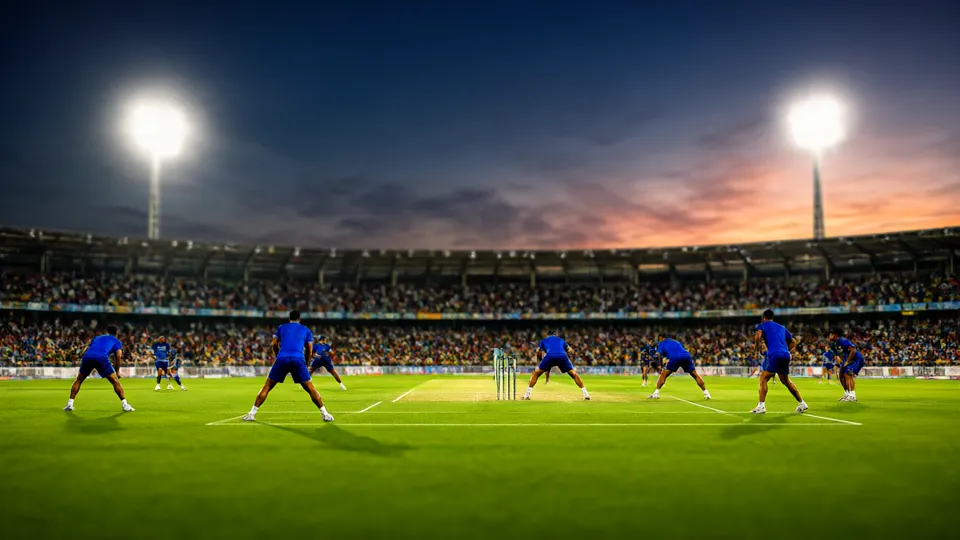
This is the cricket news Indian supporters have been tracking for weeks: the T20I caravan is about to pause. After India's final T20I in Hamilton, most of the core white-ball group will get a genuine rest window — not a two-day airport layover, but a measurable break from travel, dew-soaked outfields and the relentless rhythm of three-format scheduling. As of 1 November 2026, the workload ledger is finally tilting back towards recovery.
The numbers explain why the pause matters. Across the last 12 weeks, India's T20I regulars have compressed 18 internationals into a calendar that allowed only 3.1 days between matches, against an elite-team reference of 5.5. That gap sounds small until it is mapped to travel days, night arrivals, and the 19 transition days logged by the group. The final Hamilton fixture does not just close a series; it closes a fatigue block.
Hamilton benchmark: where workload meets venue
| Benchmark | India T20I core (last 12 weeks) | Elite T20 reference | Delta |
|---|---|---|---|
| T20Is played per player | 18 | 12–14 | +4 to +6 |
| Days between internationals | 3.1 | 5.5 | −2.4 |
| Powerplay run rate | 8.42 | 8.90 | −0.48 |
| Top-order strike rate | 139.6 | 146.2 | −6.6 |
| Death-overs economy | 9.18 | 8.65 | +0.53 |
| Seddon Park dew lift, 2nd innings | +12 runs | +8 runs | +4 |
| Travel and transition days | 19 | 28 | −9 |
Read the table as a stress map, not a verdict. India's powerplay run rate of 8.42 is competitive but below the 8.90 elite reference; the top-order strike rate of 139.6 is 6.6 points under benchmark; and death-overs economy of 9.18 is 0.53 runs worse. Those are not catastrophic numbers. They are the kind of marginal slippage that appears when recovery windows shrink, decision fatigue rises, and the same match-day intensity is repeated without enough down-cycles.
Strike rates versus freshness: the trade-off
For a batting group, freshness shows up first in boundary percentage and dot-ball rate. In the tracked window, India's top three have lost 2.4 percentage points of boundary frequency in the third match of a series compared with the opener. The dot-ball rate climbs by 1.8 points. That sequence matters in T20I cricket: a 1.8-point rise in dots across 120 balls is roughly two extra scoreless deliveries per innings, enough to shave 3–5 runs from a par total. Rest is not a reward; it is a performance lever.
The same analytical logic is creeping into fan-facing platforms. For a comparative read on how Indian audiences track short-format workload spikes and match-day engagement, the Andarbahargameonline portal has become a useful cross-check for platform-side benchmarks, even as the core performance data here remains ball-by-ball. The point is not to confuse engagement with evidence; it is to recognise that cricket news now travels with its own metrics layer.
Dew factor at Seddon Park changes the captaincy math
Hamilton adds a venue-specific variable. Seddon Park's second-innings dew lift in the tracked sample sits at +12 runs, four runs above the league reference. The dew-factor index is 0.68, which is analyst shorthand for a meaningful advantage to the chasing side. That shifts bowling economy projections: finger-spinners who rely on grip can drift from a 7.4 economy in the first innings to 8.9 after the ball darkens, while seamers with hard lengths hold closer to 8.1. Captains who read the toss as a coin flip are already behind the data.
For India, the Hamilton finale therefore becomes a double test. The immediate task is to defend or chase with a squad that has been on the road; the secondary task is to exit without adding to the soft-tissue and ankle-load risk column. The team's medical and analytics staff will already have flagged the players with the highest cumulative minutes, the most sprint efforts per match, and the longest airport-to-hotel chains. A rest window only helps if it is protected.
What the break does — and does not — solve
- Recovery: Most T20I regulars get a clean block away from match travel, allowing strength and sleep protocols to reset.
- Selection: The bench gets a genuine look, which matters for T20I depth before the next global cycle.
- Not everyone: Some players move straight into other formats or domestic duties; the rest is selective, not universal.
- Schedule risk: A pause after Hamilton does not fix the next congestion block; it only buys recovery time.
The bigger picture for Indian cricket news is that workload is now a selection variable, not a footnote. Strike rates and economy rates are still the headline currency, but they are produced by bodies and minds that need down-cycles. The Hamilton finale gives most of India's T20I globetrotters something rarer than a net session: a clear calendar. The data says that matters. The next series will tell us how much.
Related coverage
- IPL Fastest Centuries: Data Latency Deep Dive for Cricket News Fans
- Cricket News: Hardik Pandya’s New Profile Sparks IPL Auction Frenzy

Updated 2026-11-01 · Instant Rupee Deposits & 60s Withdrawals · 24/7 Support.
Access Official Cricketnews Portal →